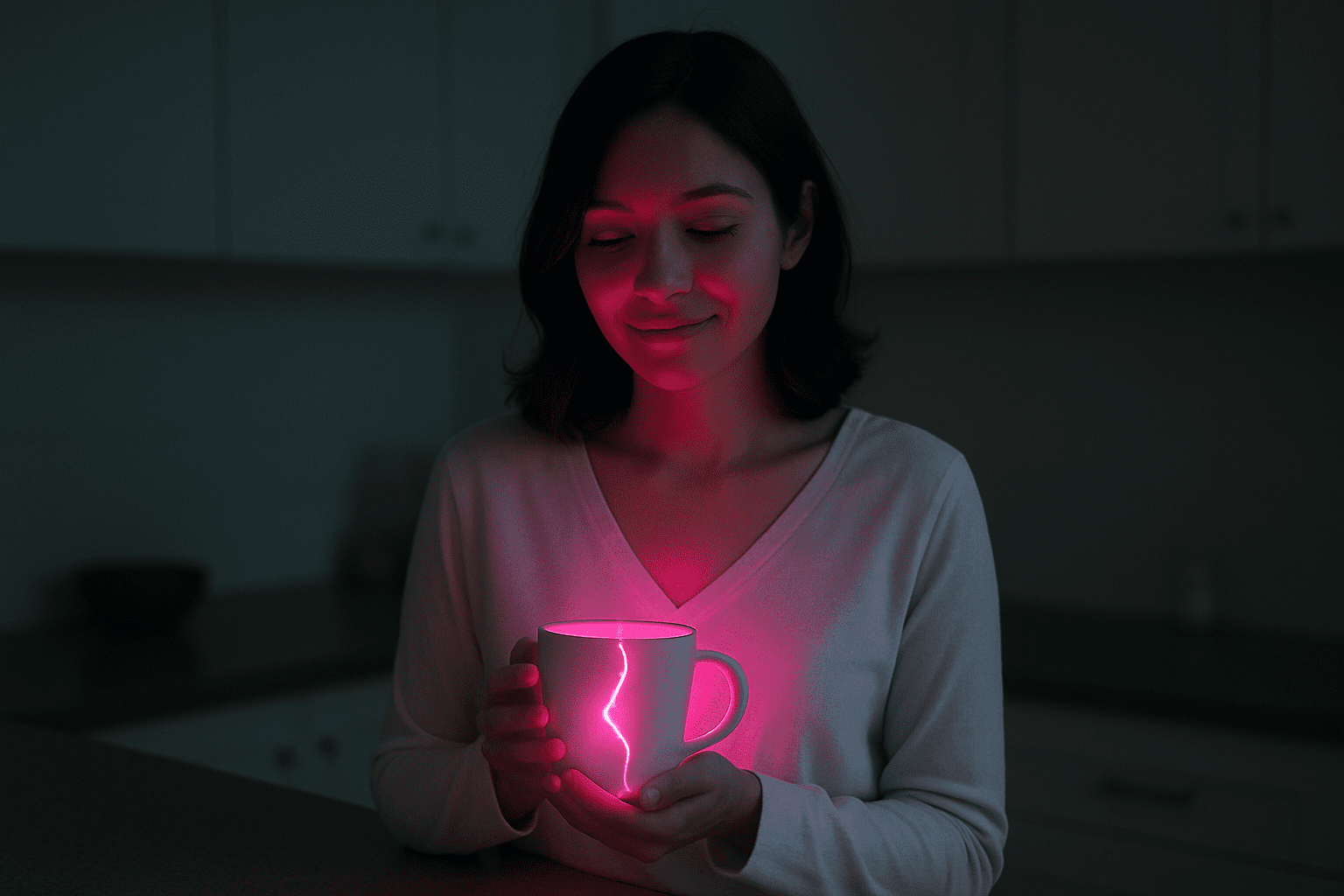
Some days, you realise you’re too tired to pretend, yet you catch yourself smiling anyway. The expression has nothing to do with how you feel. You’re not happy. Or even trying. You’re just making the automatic face people expect because it keeps the day moving and saves you from conversations you have no interest in having.
It’s strange how easily it becomes a habit. Your cheeks lift, voice softens, and before you know it, the whole thing reads as effortless to anyone watching. Meanwhile you’re quietly unimpressed with the entire performance. The weight of it in your jaw drags before you feel it anywhere else. That tiny ache that tells you you’ve been holding yourself together for the benefit of other people for far too long.
And the truth is, the smile is rarely about kindness. More… efficiency. It keeps situations smooth. People settle. It keeps the peace in moments that would become painfully tedious if you let your mask slip. You’re not being fake, simply strategic. But quite frankly, you’re too tired to pretend the strategy is still working. You see the same pattern in Invisibility Tax, where I talk about how the smallest edits to yourself accumulate until you barely recognise what part of you is left in the room.
The weariness builds quietly. You notice it when someone makes a thoughtless comment while your face responds in the socially acceptable way. Meanwhile, your mind is already elsewhere. You feel it when the smallest interactions leave you drained in ways you can’t quite justify. Not because they were dramatic but because you spent the whole time performing your way through them.
At some point the whole thing starts to feel faintly ridiculous. You wonder how long you’ve been doing this and why it took you so long to admit that the effort does not match the reward. And once you see the gap, the smile becomes harder to maintain. Not out of rebellion. Out of simple, good old-fashioned fatigue.
When You’re Too Tired To Pretend
It creeps in quietly. One day you’re getting through a conversation, offering the neutral responses that keep the air calm. The next, you realise you’ve been doing it for years without thinking. It’s unsettling when that kind of awareness finally lands. No drama. Just a quiet tug somewhere inside that says this isn’t me at my most honest. I’m on autopilot…
Masking never feels like masking when you start. It feels like sensibility, like reading the room, until you’re too tired to pretend it isn’t costing you. What began as the easiest way to avoid friction becomes muscle memory.
You adjust a sentence here, tidy a reaction there, and before long, the adjustments become muscle memory. Your mouth moves before your actual thoughts arrive. If this feels familiar, Caught In The Loop takes that idea further, looking at how we end up repeating behaviours long after they stopped feeling like choices.
What really exhausts you isn’t the performance itself. It’s the fact that you lose track of where the performance ends and where you begin. You have a version of yourself for work, another for family, a gentler one for acquaintances, and a slightly filtered one for people who say they want honesty but get unsettled when they receive it. But that’s how many women were conditioned to survive the social landscape.
You start noticing the strange little moments. You say something that feels true enough, but not quite the whole truth. You laugh at something you don’t find even slightly funny. You offer a polite response instead of the accurate one because the accurate one would take more energy than you currently have. None of these moments are dramatic, yet together they create a quiet erosion.
The unsettling bit is how automatic it becomes. You realise you’ve been performing without ever consciously deciding to. It wasn’t a choice as such. More a gradual slide. An accumulation of small self-edits that once felt harmless and now feel like they have blurred the edges of who you actually are.
And once you notice the performance, you can’t unsee it. Not out of shame or crisis. You’re simply too tired to pretend the rehearsed version is the whole of you while the rest waits in the wings while your rehearsed version handles the crowd.
The Energy Lost To Approval
It takes a surprising amount of energy to manage other people’s comfort. Most of the time you don’t realise you’re doing it. Offering the safe version of your opinion, the truth is diluted because experience has shown you that honesty can create more work than you care to deal with.
Approval often pretends to be harmless. It disguises itself as considerate, flexible, agreeable, pleasant. Yet when you look closely, it’s astonishing how much of your day is spent adjusting yourself so no one flinches. You tidy your tone so it lands clean. You phrase things in a way that doesn’t ruffle, which is faster than dealing with someone else’s reaction. Manage your expressions to avoid unnecessary speculation. It’s usually quicker than dealing with the fallout of being seen fully.
The strange part is that approval rarely gives you anything in return. It makes other people feel settled, yes, but it doesn’t settle you. It keeps situations smooth enough on the outside while quietly draining your insides. You start ending conversations feeling oddly depleted, even when nothing of substance happened. It’s not the content that exhausts you. It’s the calibration. Research describes this as surface acting: changing the emotion you display without changing what you actually feel, a pattern consistently associated with emotional exhaustion.
It’s a similar shape to what I explore in The Invisible War, where I talk about the kind of battles women fight silently because explaining them would take more energy than surviving them.
After a while, you’re too tired to pretend the cost is anything but embarrassingly visible. You feel the small dips in your energy after interactions that should’ve been simple. Notice how often you apologise for things that don’t need apologies, and the tiny hesitations before you speak, the small pauses you pretend are nothing. The ones where you quickly run your words through a silent filter to keep everything pleasant.
None of this means you’re weak or overly accommodating. It means you were raised in systems where approval was equated with belonging, and belonging was equated with safety. It makes sense that you learned the rules. It also makes sense that the rules now feel too tight for the person you have become.
The moment you see how much energy is tied up in being acceptable, something subtle shifts. Nothing dramatic. Just a small refusal to keep paying out of habit. You start speaking in a way that doesn’t bend quite as much. You let your real tone through a little more, speak a fraction slower. So your actual thoughts have time to show up.
Small changes. Nothing life-altering. Yet, they free up more energy than you expect. You start to feel a quiet relief, as if your nervous system has been waiting years for the chance to stop managing every interaction like a delicate balancing act.
Choosing Yourself Over The Performance
Choosing yourself is rarely dramatic. It doesn’t arrive with clarity or fireworks. Most of the time it begins on an ordinary day where you feel a flicker of irritation at the small ways you edit yourself. SSomething in you simply stops cooperating with the performance. You’re too tired to pretend, not suddenly committed to rebellion.
You start catching yourself in the act more often. The polite response that had nothing to do with what you actually thought. The quick smile you offered because it was easier than explaining why you were not in the mood. None of it feels catastrophic; just feels increasingly out of sync with the person you know you’re when no one is watching.
Choosing yourself doesn’t require an announcement. It’s quieter than that. It begins with one internal permission. You let yourself have a reaction without polishing it, answer slowly instead of offering the quickest agreeable response. Or let your face rest instead of arranging it into that familiar expression that keeps everything neat. There’s a sharper edge to this in Permission Is A Weapon where I talk about how giving yourself the smallest sliver of permission can change the entire weight of a moment.
Nothing collapses when you do this. The world doesn’t fall apart. Most people barely notice at all. But you do. You feel a small relief in your chest when you don’t force yourself into a role you’ve outgrown or the subtle steadiness that arrives when you stop shaping your presence around other people’s expectations, even the unspoken ones.
It’s not about being bold or fearless. It’s about being accurate. You start telling the truth in tiny, manageable doses. Not the grand truth of your life, just the truth of the moment. You say what you mean without dressing it up. You admit when you’re too tired to pretend you’re fine. You decline something without offering an explanation because you don’t owe one.
The real shift happens inside. You realise the world didn’t crumble when you stopped bending. That your relationships become clearer the moment you stop performing and not always in the ways you expected. It’s not always comfortable, but it’s honest, and honesty is easier to carry than performance. This is where Disrupt sits quietly in the background. Not to shake your life into pieces, but to make you aware of how often you’ve shaped yourself around expectations that were never yours to manage.
This is the part of the journey REVEAL was built for. Not to reinvent you or deliver some sweeping transformation. Just to give you a place where the masks can finally loosen without you second guessing every inch of it all. A space to recognise the patterns, understand the cost, and choose a version of yourself that matches how you actually feel, not the one you’ve been trained to present.
Choosing yourself isn’t loud or cinematic either. It’s a series of small, steady decisions that slowly return you to the person who has been waiting under all the quiet adjustments. And once you feel that return, even briefly, you’re too tired to pretend the old performance still fits.
NyxDrop™: Choosing yourself isn’t rebellion. It’s simply the moment you stop paying for a version of you that never offered a return on investment.