You can dress it up with all the jargon you like, “transformational learning environments,” “applied psychosociology,” “narrative identity frameworks,” but most people don’t change their lives because someone waved a pie chart at them. They change when a story gets under their skin and won’t let them go. That is how symbols shape behaviour: they make meaning felt before it is fully explained.
That’s why I don’t advise ‘visualising abundance’ and calling it a day. Humans are messier than that. We’ve been wired for symbols and stories since we were drawing antelopes on cave walls, not bullet points on PowerPoints. It’s not fluffy; it’s neurological wiring.
And yes, I’ve got the academic receipts to back this up. Years of research, a PhD that nearly broke me, and more unfinished papers than I care to admit. Not to impress you, but to be clear that this isn’t intuition dressed up as insight. But the point is: symbolism isn’t decoration. It’s what’s actually running the show. And if you ignore it, you’re basically trying to run modern software on a Stone Age machine.
So this is the backbone of what I do at Nyxiom: symbolism, metaphor, and storytelling, not as belief systems, but as practical ways humans make sense of change when logic alone stops being enough. Not because it sounds poetic, but because it works deeply, often quietly, and without asking you to suspend your common sense.
How Symbols Shape Behaviour: The Cheat Codes of Being Human
Brains are lazy. Throw someone a list of facts and you’ll see the shutters come down. Wrap the same facts in a story and suddenly they’re leaning in, following every beat. This isn’t a modern glitch; it’s age-old wiring. Our ancestors didn’t survive because someone handed them a chart of edible berries. No, they survived because they heard what happened when Uncle So’n’so ate the wrong ones and transitioned to the next life. Story equals survival.
Fast forward a few millennia and not much has changed. We like to think we’re rational creatures but watch how quickly we fold under the weight of a good narrative.
And this isn’t just “out there” in culture. It’s in how we carry ourselves. Ask someone who they are, and they’ll tell you a story. Not a list of facts. A story. “I grew up here, I did this, then this happened, now I’m here.” It’s stitched together like a plot. Psychologists call this narrative identity. We don’t just live our lives, we keep narrating them, and that narration quietly becomes who we think we are. You’re not just you; you’re the protagonist of a script written partly by you, and partly by everyone who ever had a say.
And when the story doesn’t fit anymore, people often pause, stall, or feel lost, not because they’re broken, but because the old script no longer works and the new one hasn’t arrived yet. That’s when they show up saying things like, “I feel lost,” or “I don’t know who I am anymore.” They’re not necessarily lost. Often, they’re between scripts. The old one no longer works, the new one hasn’t been written yet, and that gap feels unbearable.
When Words Become Weapons (or Lifelines)
Symbols are shortcuts. They bypass logic and go straight to behaviour. A flag, a logo, a ritual, a piece of clothing, none of these matter because of what they are. They matter because of what they carry, and how that meaning changes how people act. That’s why people fight over colours, feel steadied by objects, or show up differently when something feels symbolic. Not because it’s magic, but because symbols slip past the part of us that argues and go straight to the part that acts.
Political propaganda relies on this too; flags or colours designed to stir allegiance without debate. Advertising does the same, just with better lighting. We need to notice how we’re being nudged and decide how consciously we want to engage.
Used consciously, symbols help people step into new roles without tearing down who they already are, or demanding they become someone else overnight. A ring, a candle, a haircut after clearing something dead out of your life. Not childish games, but ways of giving form to intentions that would otherwise stay abstract.
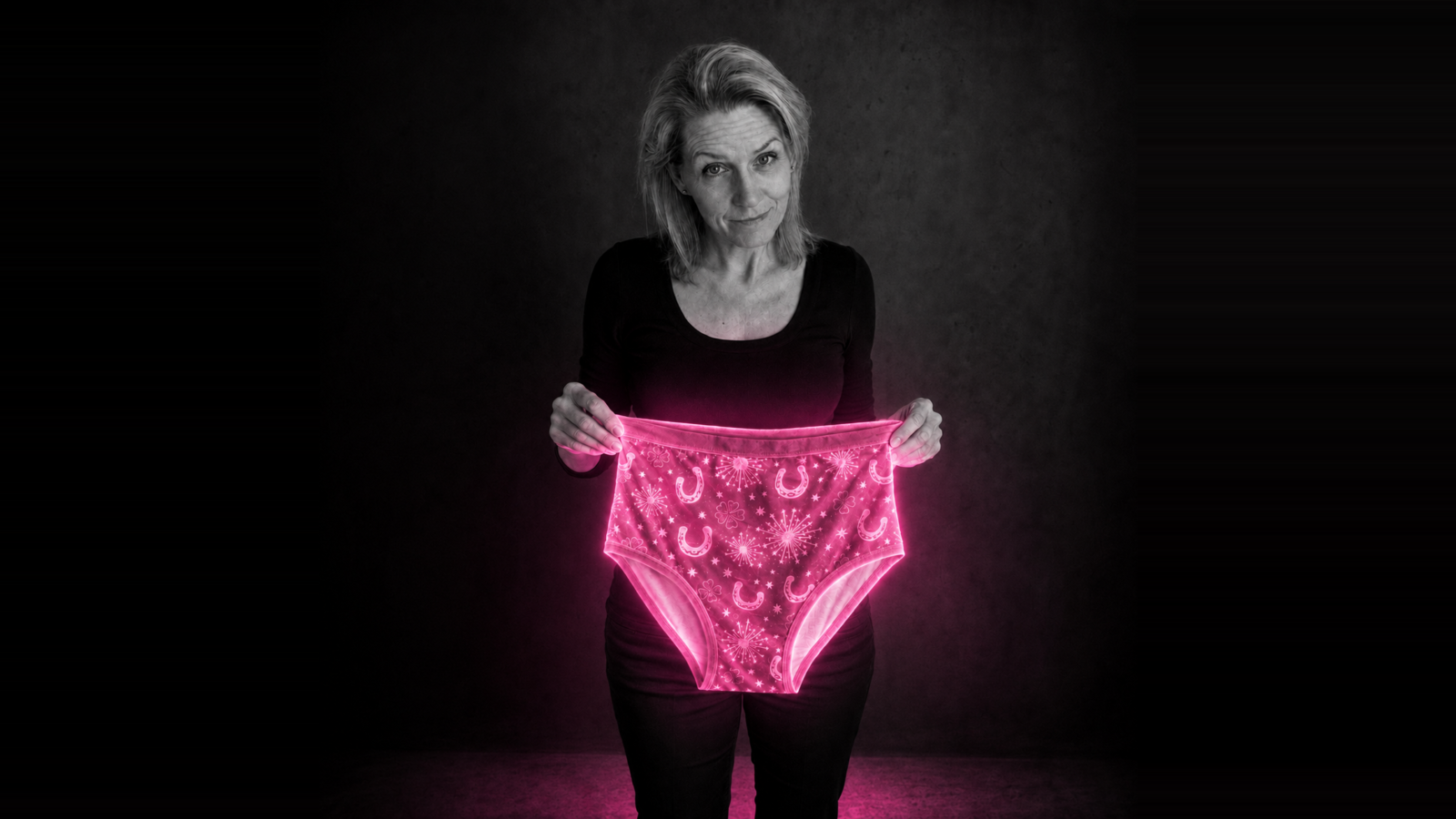
And yes, sometimes the symbol is a pair of lucky underpants. The ones you reach for before an interview, an exam, a difficult conversation, or any occasion where confidence and elastic are both under pressure. You know they aren’t controlling the outcome. But you stand differently when you put them on.
The power isn’t stitched into the fabric. It sits in the meaning you’ve attached to it. Those underpants become a private cue: I’ve faced hard things before. I know who I am when it matters. Not magic, just memory, identity, and a small piece of cotton doing surprisingly serious work.
And here’s the messy truth: one person’s sacred symbol is another person’s shrug. What hits hard for you might mean nothing to me. That’s not a flaw, it’s the point. Which is why working with symbols isn’t about one-size-fits-all. It’s about offering enough of a symbolic palette that something resonates. Sometimes you need a swoosh, others, a lotus.
Sometimes You Need the Map. Sometimes the Socks.
If symbols are the big banners we gather under, metaphors are the everyday software we don’t even notice running. They don’t live in stained glass or logos; they live in the way we talk to each other, the phrases that sneak into our heads and quietly dictate how we see ourselves. This is where the personal meets the cultural and where the big stuff filters down into how you describe your everyday life. Metaphors aren’t decoration; they’re structure.
So, think about how often we describe life in physical terms. You’re “carrying baggage” from your past. You’ve “hit a wall” at work. You’re “climbing the ladder.” None of these phrases are literal, but they do shape our behaviour. If you believe you’re carrying baggage, you’ll act like you’re weighed down. If you’ve “hit a wall,” you stop moving, even if there’s a perfectly good door you haven’t looked for yet.
Even motivation gets wrapped in metaphor. People talk about “pushing through,” “climbing the ladder,” or “keeping their head above water”. Metaphors aren’t neutral; they come with rules baked in, compressing whole worldviews into a single image that tells you how to feel and how to move. You don’t need to read the manifesto; the metaphor tells you how to feel.
But a metaphor, like “What happens when you step out of the shadow?” opens a door. Suddenly, the person isn’t defending their ego; they’re exploring a landscape in their mind. It’s safer. It gives distance. They can play with the imagery without feeling attacked.
And let’s not pretend metaphors are always neat or helpful. Some of them weigh us down for decades. Think of the “stiff upper lip.” One metaphor about control and suppression that shaped generations. Metaphors carry values, and those values shape behaviour.
The relief is this: you don’t have to stay stuck with the metaphors you inherited. Instead of “climbing the ladder,” maybe life is “walking a spiral,” where you keep circling back but on a higher level each time. Or, instead of “keeping your head above water,” maybe you’re “learning to swim.” A tiny shift in metaphor can change the story you play out, which means it changes what you think is possible.
And the beauty of it? You don’t need to believe in it. You don’t need to light incense or chant. You’re already doing it, every time you say you’re “running out of time” or “weighing your options.”
This is why you’ll find tools like oracle decks and past life journeys on my site. Not as belief systems, but as mirrors. Ways of giving shape to what’s hard to articulate. The point isn’t whether it’s ‘woo-woo’. The point is whether it opens something that was previously shut. Does it open doors that brute-force questioning slams shut? For me, and those I work with, that’s the measure. And it’s why I stand by using whatever symbolic tools do the job.
Not a Straight Line, More Like a Pick-Your-Own-Adventure
Metaphor isn’t window dressing. It isn’t the poetic garnish slapped on top of “serious” work to make it sound clever. It’s the scaffolding; in other words, the frame that holds the whole thing up. When you’re dealing with the mess of being human, you need something that helps you step into it without being crushed by it. Story, symbol, metaphor – they’re the tools that can let people actually do that.
I saw this same principle show up in my academic work. Again and again, people told me they worked hard because they wanted “nice things.” At first glance, that sounds like luxury: yachts or shiny cars. But the closer I looked, the clearer it became: “nice things” weren’t luxuries at all. They were the little anchors that made life bearable. A takeaway coffee, a new pair of socks, or even ten minutes of quiet in the car before going inside to face whatever chaos was waiting. Not extravagance. Just sanity in object form. The phrase “nice things” was a metaphor; a way of carrying the weight of survival and dignity without having to spell it out.
That’s what metaphor does. It gives you language for what’s otherwise unsayable, offering a sideways entry point when going straight in would be too much. You can circle the edges of something without tearing your identity open in the middle of it, or demanding answers before you’re ready. It’s easier to talk about “carrying baggage” than to say you’re drowning in grief. Easier to say you’ve “hit a wall” than to confess you’ve run out of hope. Metaphor takes the unbearable and makes it nameable, and once it’s named, you can start working with it.
A symbol isn’t a machine that always delivers the same output. It’s more like weather: it moves differently depending on the season you’re in. Some days you need the map. Other days, only the socks will do.
The ethics of this work sit in the variety; by having enough metaphors, stories, and tools on the table that people can pick what actually fits them in that moment. Because the danger isn’t in someone choosing a symbol that doesn’t resonate. The danger is in being told there’s only one way, and if it doesn’t work for you, the fault is yours.
This is also why my Decode, Disrupt, Declare™ framework exists. It’s a set of signposts; three different landscapes, each with their own tools, none of them compulsory. Step into the one that makes sense today. Some days you’ll want the clarity of Decode, where you can map out the terrain and see your patterns without judgement. Other days you’ll be pulled into Disrupt, when the old loops need shaking loose and you’re ready for sharper edges. And then there are days when nothing but Declare will do; when you need to say it out loud, claim it, move with it.
The point isn’t to hold you hostage in a sequence. One day you may be deep in Decode, the next you may wake up already in Disrupt. Because transformation isn’t linear, and neither is the language we use to reach it. It’s flexible by design. You can circle back, dip in, skip ahead, whatever suits. Because when life feels unmanageable, metaphor can frame it. When the old story doesn’t fit anymore, symbolism offers a new one. And sometimes that shift isn’t fireworks; sometimes it’s ordinary. An eagle in your dreams. A crossroads on the page. Or simply the relief of saying out loud, “I just want nice things,” and realising that what you’ve really been asking for is dignity.
This is How Humans Rewrite Themselves
This is why I built Decode, Disrupt, Declare™ the way I did. Not as a neat staircase but as a toolkit for the messy truth of being human. Because let’s face it: nobody’s life actually lines up like a before-and-after advert. But here’s the thing: it’s not tidy. It doesn’t arrive on schedule, and it doesn’t follow bullet points. Real change is awkward, sideways, sometimes hilariously inconvenient. And it sticks not because you memorised a list of steps, but because something in the story you’ve been living finally shifted.
Symbols and metaphors matter because they give shape to what would otherwise stay unspeakable. A slogan can rally a protest. A logo can spark loyalty so fierce people will fight over it. A ring on a finger can change the way someone introduces themselves in a heartbeat. These aren’t surface flourishes. That’s the machinery underneath everything.
Even in the most ordinary of lives, the metaphors we use decide our moves. Call your burnout “a rough patch” and you might ride it out. Call it “a wall” and you’d likely stop cold. Call it “a crossroads” and suddenly you have options. Same reality, really.
When I say Nyxiom is built on story, metaphor, and symbol, I’m not talking about poetic branding. I’m talking about realism, how humans actually move through change. Humans don’t move because they’re instructed. They move when the frame shifts, when the story they’ve been living no longer fits and another one finally does.
NyxDrop™: People don’t change because they’re instructed. Change happens when a story or symbol shifts the ground beneath what felt fixed.