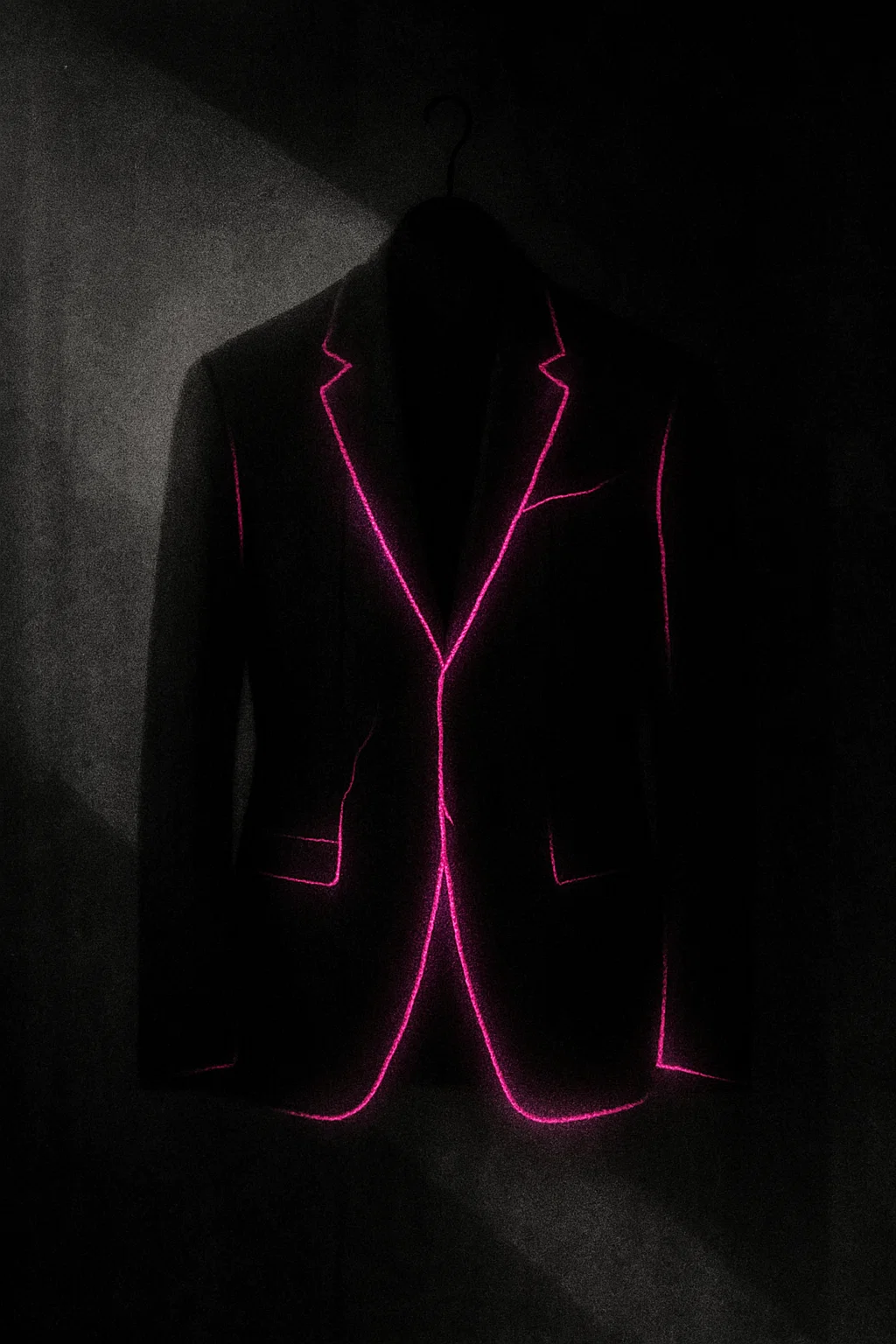
Unpacking how strength becomes a survival performance, and the cost of wearing it.
In the first piece of the Survival Scripts™ series, I traced how debt and worth became entangled until survival itself was mistaken for value. That was the private ledger: the costs carried quietly. This next strand looks at the public stage, because survival is not only lived, it is performed. And when strength becomes the mask, the applause can be as heavy as the silence.
The Costume of Strength
Strength is one of those qualities that garners admiration in every corner of life. It’s a cultural symbol: something to strive for and something that others reward. Yet, in the stories shared in my research, strength was rarely framed as resilience or an abundance of resources. Instead, it was spoken of as something necessary to survive.
Participants spoke about how they “managed,” how they “kept going,” how they “held it all together.” These were the signals of strength they showed to the world, and they often felt like the only option to survive. Beneath that surface, however, there was something else at play. Strength was not simply being strong; it was about being seen as strong.
What stood out in these accounts was the performance of strength itself. Participants were not just managing their own lives; they were putting on a show of strength for an audience: whether it was family members, colleagues, or even strangers passing by. And the performance was reinforced by praise: ‘Look at you, managing it all.’ ‘I don’t know how you do it.’ These comments, although well-meaning, subtly carried an expectation.
At first glance, these comments might seem like compliments, but they were, in reality, expectations. The more convincing the performance, the more it became a mask, one that participants found difficult to shed.
By wearing the mask of strength, participants could avoid the social judgement that might accompany vulnerability or failure. If they kept up the act, they stayed safe. If they faltered, they risked being seen as weak. But staying strong, maintaining the mask, came at a price. The more it was applauded, the less they could show the cracks underneath.
Applause and Expectation
The performance of strength doesn’t happen in a vacuum. It’s sustained by an audience: family members, friends, colleagues, even strangers who observe and comment. Strength, in this context, isn’t just an internal state. It’s something that’s constantly evaluated, praised, and reinforced by those around you.
When participants spoke about their struggles, many mentioned how others admired their ability to “hold it together,” “keep going,” or “manage it all.” On the surface, these comments seemed supportive. They were meant as compliments, as signs of respect, or even awe. But the praise also carried an unspoken weight.
The more people applauded the act, the more challenging it became to step away from it. Strength, in this social sense, became less about resilience and more about performance. Every comment, every compliment reinforced the expectation that they must continue.
It wasn’t just that others saw them as strong, they became strong in the eyes of others. The more they performed, the more their sense of self-worth became tied to how well they managed, coped, and endured. In a society that places such high value on strength, being seen as anything less feels like failure. The applause keeps you stuck.
This cycle plays out in all areas of life: at home, at work, in social settings. People admire you for “holding it all together,” and they tell you as much. At first, it feels like a reward. But as time goes on, it becomes a trap. The applause is no longer just for survival. It’s for maintaining the performance. To step away from the act is to risk being seen as weak, as incapable, as not enough.
What’s ironic here is that the applause, which should feel empowering, quickly becomes suffocating. The longer you wear the mask, the harder it becomes to remove it. Strength as performance doesn’t allow for vulnerability or imperfection. To acknowledge exhaustion or the cracks in the mask feels like you’re letting everyone down. You are no longer “strong” if you show the strain.
The Hidden Cost
Strength, when it’s a mask, isn’t something you wear once and take off. It’s something layered on day after day, until it becomes the face you can’t take off; a constant performance that demands emotional energy. It’s not a choice anymore; it’s survival. But wearing that mask, holding it all together. That takes something. It takes energy. It takes everything.
People spoke about what they showed the world. They managed, they coped, they got through. These weren’t just throwaway words; they were the lines they were expected to live by, over and over. To admit vulnerability, to show weakness, was not just uncomfortable. It was unthinkable.
At first, it was manageable. The mask fit, and the world rewarded it. ‘You’re doing so well,’ people would say. ‘How do you keep it all together?’ But over time, the mask started to feel heavy, and the praise began to feel like a trap. These comments, though meant as encouragement, started to feel like chains. The more they were praised for being strong, the more they were expected to be strong. The performance became a requirement. And the longer it went on, the more it felt like the only thing that mattered: the one thing they had to get right.
But what happens when the performance doesn’t feel like a choice anymore? What happens when you’ve played the role so many times that it’s you… or so it seems?
The exhaustion didn’t come all at once. It crept in. It was the moments when you should’ve been able to stop but couldn’t. The moments when you thought you could rest, but the weight of holding it all together never left. The silence was ever-present, a constant reminder that you couldn’t drop the act, even when you were alone.
“I don’t even know how to switch off,” one person said. “It’s like there’s always something telling me I need to keep going. Like if I stop, everything will fall apart.”
This was the cost, quietly exacted. The applause felt good in the moment. But the longer the act went on, the more it drained. Because when you’re seen as strong, you’re seen as unbreakable. The more you take on, the more people see you as the one who can handle it all. The more they rely on you to be strong, the harder it becomes to let them see you for who you really are.
It wasn’t just physical. It was emotional too. How much of yourself can you give when you’re not even sure who you really are anymore? How much energy can you pour into others when you have none left for yourself? You begin to feel lost in the performance. The mask becomes so entrenched that it’s hard to remember who you were before it.
And when that happens, you start to disconnect. You stop sharing. You stop letting others in because vulnerability feels too dangerous. When strength is your mask, there is no room for weakness, for doubt, for tiredness. You become isolated in your own performance. You become the one who carries the weight alone.
The hidden cost of this performance is that piece by piece, you lose touch with who you are. You begin to believe the mask is all that you are. You stop seeing the cracks because the mask becomes your face.
Cracks in the Mask
The cracks often come when you stop performing; when there’s no audience watching. You’ve performed strength for so long, it becomes second nature. You convince yourself that it’s who you are, that this is the only way to survive. But the cracks, they’re always there, waiting to show through when the act feels too heavy to carry.
Sometimes, it’s a fleeting slip in control, where the cracks begin to show in the exhaustion of holding it all together. The kind of moment when you feel a pang of vulnerability but can’t afford to acknowledge it. It’s the tiredness that never goes away, the quiet overwhelm that no one else can see. That’s when the mask starts to feel like a weight too heavy to keep in place.
Those cracks are ignored, not just by the world around you, but by yourself. Strength becomes something you don’t question, something that becomes part of the script you’ve learned to perform. The mask becomes so ingrained in who you are, you can’t tell where it ends and where you begin. You don’t just wear it; you live it.
Once the mask slips, there’s no going back. The fear isn’t just about being seen as weak; it’s the fear that the identity you’ve built around this performance will collapse with it. What if you let go, just for a moment, and it all unravels?
You start to question: who are you without the mask? How much of yourself have you lost in the act of surviving? The cracks don’t just reveal vulnerability; they reveal that what you’ve been performing wasn’t strength at all. It was just survival, wearing a face that the world could applaud.
But even in the cracks, there’s a truth that’s hard to swallow: the mask was never meant to protect you. It was meant to keep everyone else from seeing the truth. It wasn’t about showing strength; it was about proving you were worthy of being seen.
Breaking Strength Open
Strength, when it becomes a mask, isn’t something you wear once and then take off. It’s something that builds up over time, slowly taking root, until you forget it’s even a performance at all. What once began as a survival mechanism, a way to get by, becomes something more; it becomes the way you are seen. But the longer you wear it, the more you forget it’s not real. You start to believe that the performance is you.
The cost of this is quiet and often goes unnoticed, at least until it feels too heavy to carry. What was once a shield for vulnerability becomes a prison. When survival is the sole focus, strength becomes a means to keep the mask intact, to keep up the appearance that you’ve got it all together. But eventually, that performance erodes your sense of self. You start to mistake endurance for strength, and surviving becomes the ultimate act, the one thing that earns you your place in the world. But the longer you perform, the more isolated you become.
The performance doesn’t just cost you energy; it costs you connection. To show the world only one version of yourself, the one that can “hold it together,” leaves little room for the person beneath that mask. That person, the one who’s tired, who’s vulnerable, who’s afraid, gets buried under the weight of maintaining an image. The cracks in the mask, the moments when you can’t keep up the act, are not just signs of weakness; they’re signs of what’s been repressed.
Strength, when performed, makes you feel seen, but not really seen. It keeps you locked in a cycle of survival without ever allowing you to live. But when that performance is broken, even just for a moment, it opens the door to something far more profound than what’s been performed for others: it opens the door to your true self.
Strength isn’t about continuing the performance until it burns you out. It’s about finding the courage to stop pretending, to stop surviving for the sake of others, and to start embracing the truth of your own humanity. Strength is found in vulnerability, in breaking down the illusion that you must always be the one to hold it together.
In shedding the mask, we find a deeper, more genuine form of strength. It’s not the strength that comes from survival alone, but the strength that arises from being seen; not for what we perform, but for who we truly are. The cracks in the mask aren’t signs of failure, but of liberation. They reveal that the survival script we’ve been following isn’t the only way. And breaking free from that performance is where we begin to reclaim our true selves.
This shift is not an easy one. It requires dismantling the very scripts we’ve internalised, the scripts that have told us strength equals survival, that to be worthy means to keep it together no matter the cost. But once we begin to break down that illusion, we make space for something far more powerful: the truth of who we are without the act. It is in this space of truth, raw and unguarded, that we truly learn to live, not just survive.
The journey from survival to thriving is a process, often a messy one. As we move through this series, we’ll continue to explore how the cost of living behind these masks influences every part of our lives, from our identities to our relationships, and how each step toward shedding them brings us closer to reclaiming the power and authenticity we’ve been hiding.
This is the path of survival: one where we stop performing, stop surviving for the sake of others, and begin to live fully, in truth itself.
NyxDrop™: Strength, when performed, is a cost not paid in full until the mask slips.
This article is part of the Survival Scripts™ series. Read the full introduction HERE.